Teaching Robots Where to Go: One World, Many Bodies
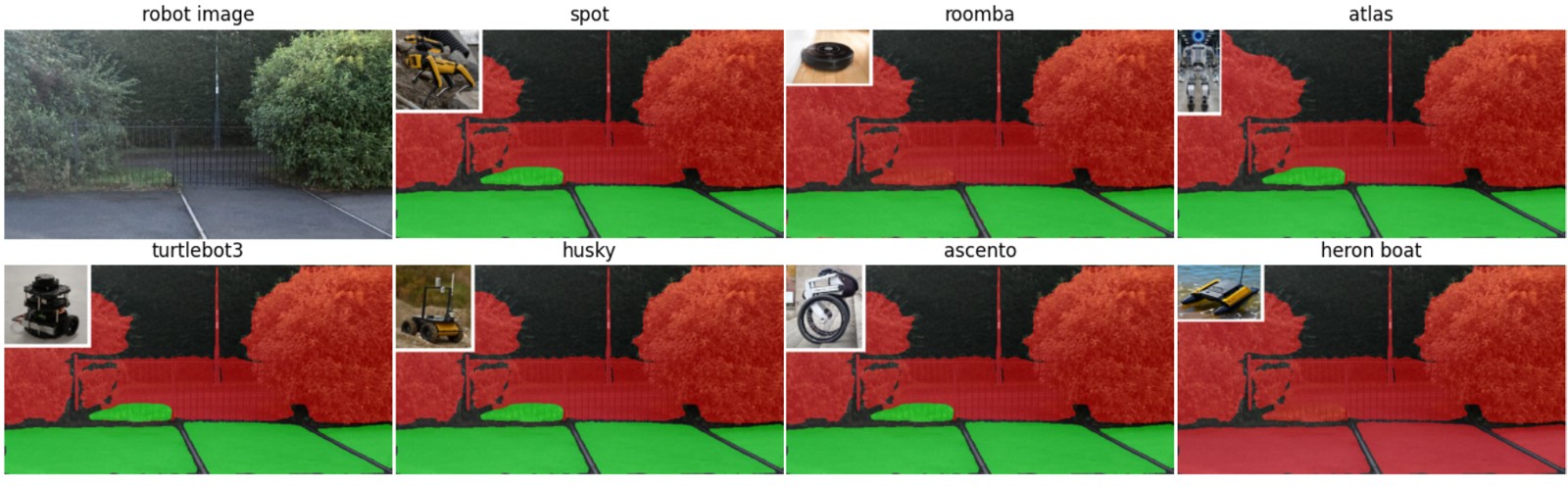
For humans, deciding where a robot can drive or walk seems easy: the path is traversable, the tree is not. For robots, it is much more complicated—and it depends on which robot you are talking about. A SPOT can step over obstacles that would stop a TurtleBot, while an Atlas or a Roomba has yet another set of capabilities.
We therefore developed a traversability system that explicitly takes the robot’s embodiment into account. Before deployment, an LLM reasons about the robot’s morphology and capabilities and translates this into relevant concepts for perception: what surfaces can it handle, what objects are obstacles, and what situations require caution.
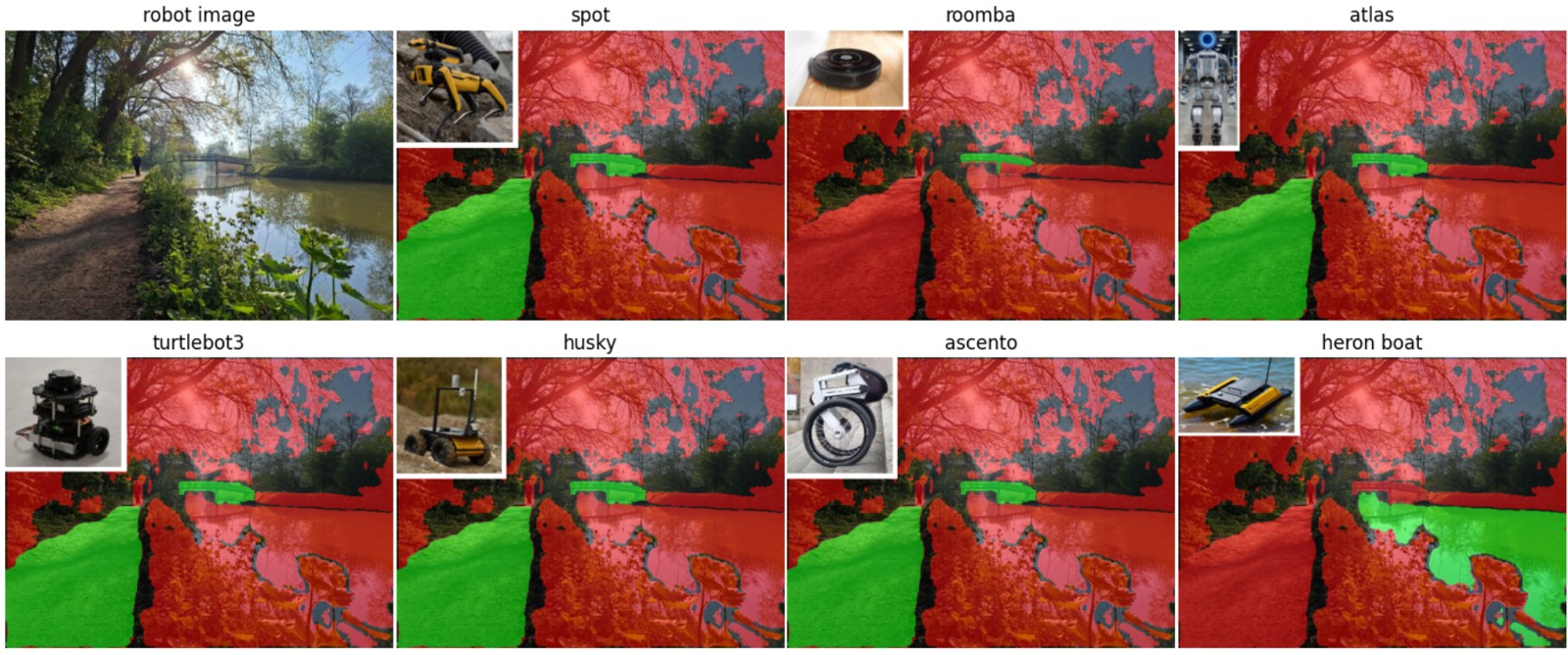
We then combine three complementary foundation models. YOLO-E provides fast, open-vocabulary object detection, while SAM3 turns relevant concepts into precise pixel-level segmentation. A VLM adds an open-world safety net: when the scene contains something that was not anticipated by the prior knowledge—say, a cardboard box suddenly blocking the road—it can reason about its meaning and enrich the traversability analysis. The result is a robot-specific map of the scene, where green means “go ahead” and red means “better not”.
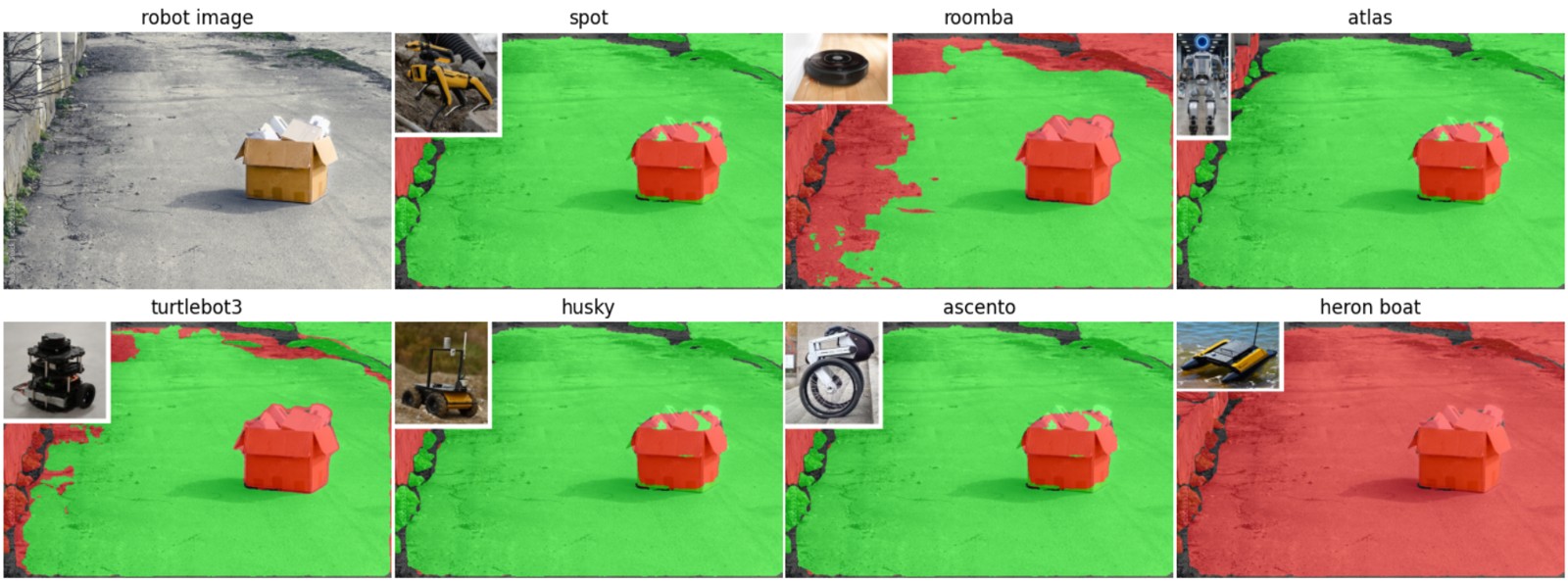
The interesting part is that there is no single “correct” traversability map. Traversability is a relationship between the world and the robot. The same staircase, branch, puddle or box can be perfectly manageable for one robot and a hard obstacle for another. By combining LLM reasoning, open-vocabulary perception, segmentation and VLM-based open-world reasoning, we are moving from robots that merely see their environment toward robots that understand what that environment means for them.